
Select a recipe to see its ingredients.

Each adventurer is the sum of two choices: a race (the body and bloodline you're born into) and a class (the training and trade you bring with you). Race sets your starting body — health, stamina, mana pool, attribute baselines, and natural aptitudes. Class layers training on top — stat modifiers, starting items, and a set of initial skill ranks.
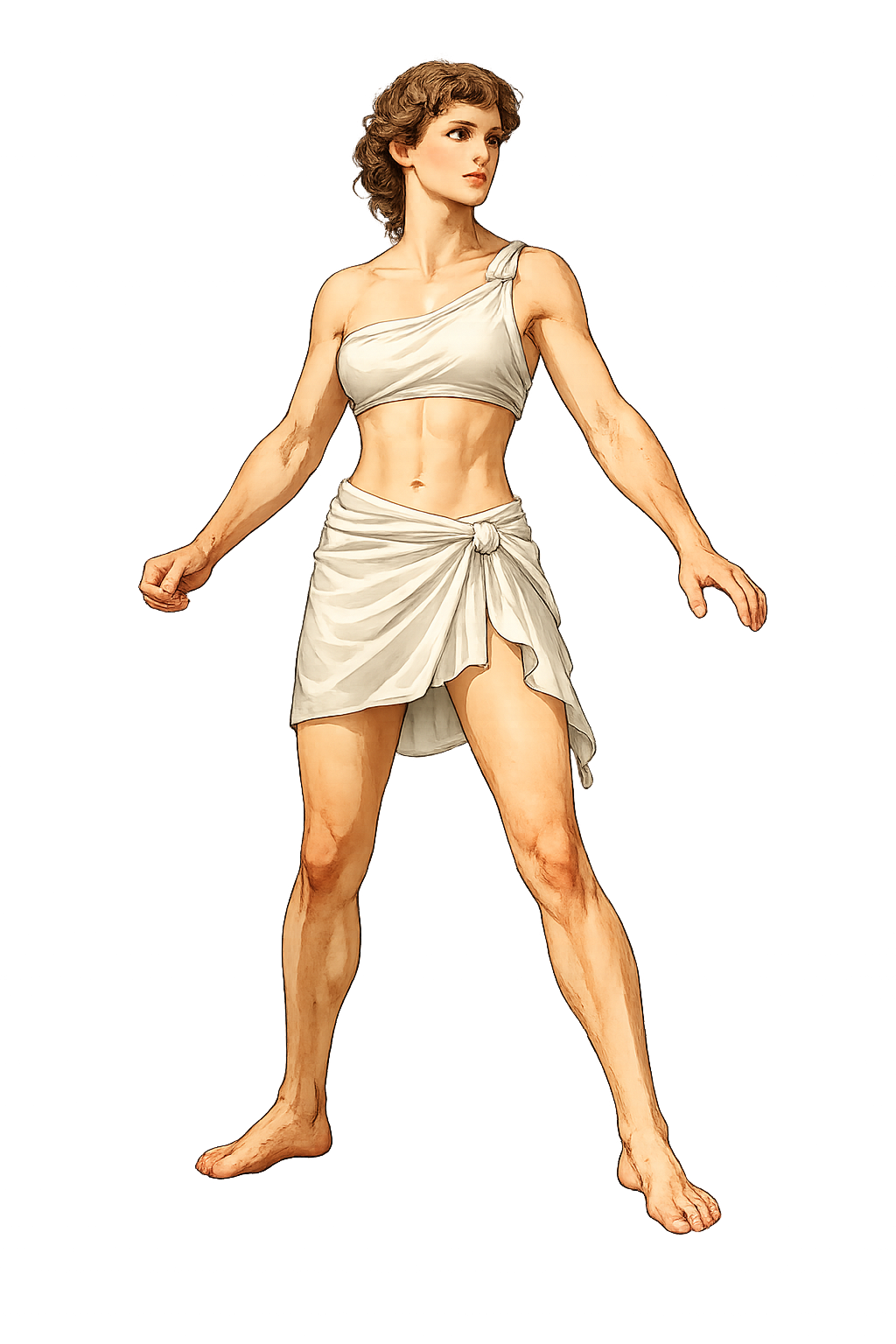
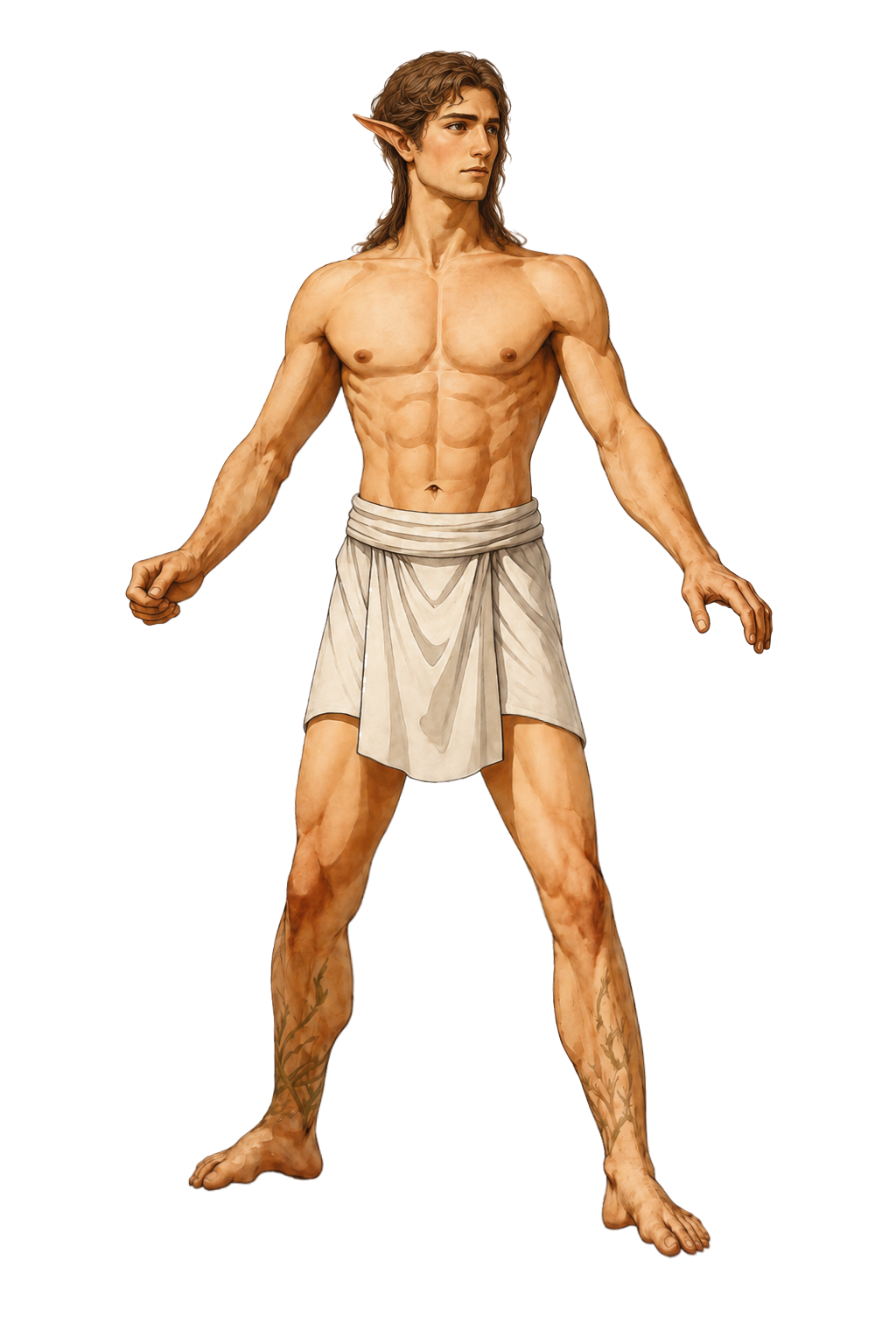
Some races come in several appearances; the one you see is the one others will see.

Three pools drive every adventurer.
Reposing recovers health and stamina. Meditating recovers mana (and a little health). See Camping.
You have three core stats — Strength, Dexterity, and Intelligence — which influence damage, hit chance, dodging, mana, and many weapon perks.
Most level-ups raise a random stat. Every third character level is a milestone: you choose which stat to raise yourself. Pick deliberately — milestones are the only stat point you fully control.
Skills cover combat (one per weapon family, plus Unarmed), defence (Dodging, Armor, Vitality, Endurance), magic (Spellcasting), and the wild (Survival).
Each skill has two states: active and idle. Only active skills earn experience when you use them. When several skills are active at once, the experience from each turn is split between all of them — so focusing fewer skills levels them faster.
Focusing a single skill in the character screen is the simplest way to drive one skill hard. Race and class also give some skills natural aptitudes that quietly speed up their levelling.
Almost everything you do — walking a node, swinging a weapon, drinking a potion, equipping armor — costs time ⏳. Time passes for everyone in the world while your action resolves, including the things that want you dead.
Some actions also cost stamina 💪 on top of time. Attacks always do; consuming an item usually doesn't.
Quick, light actions cost little time and resolve fast. Heavy actions take longer and leave you vulnerable while they finish.
Combat is turn-based but not strictly alternating — each actor's next move resolves on its own time clock.
Untrained weapons hit weaker, cost more stamina, and take longer to swing. Practice (and the right skill) erases all three penalties over time.
Beyond raw damage, weapons can carry perks that trigger on a successful hit.
Some perks scale with strength or dexterity; all of them grow stronger as you level the matching weapon skill.
The world is full of things that can stick to you — good and bad. A blessing might quicken your travel; a bleed might drain you while you fight; spoiled food might cramp you for many turns.
Effects tick at their own pace. Each tick can wound, heal, or buff you, and after a fixed number of ticks the effect fades. Some effects refresh if reapplied. Others stack up, piling on more punishment the more they hit.
Sanctuaries cleanse most negative effects. Some items, like a bandage, cleanse specific ailments on demand.



Your pack holds items you can carry. Each item lives in a slot; stackable items share a single slot when their kind matches.
Items in the pack can be:
Destroyed items are gone forever — there's no undo. Stash anything you can't bear to lose in your Vault before the next risky descent.
Camping actions restore the body and mind. They cost time and leave you vulnerable while they finish — never camp where something can find you.
 Repose — a longer rest, restores health and stamina. Companions repose alongside you.
 Meditate — quiets the mind, restores mana (and a little health). Companions meditate alongside you.
 Scavenge — search the area for food, sticks, stones, and small finds. The Survival skill improves what you uncover; some finds reveal themselves only to seasoned adventurers. Cook — prepare a meal from ingredients in your pack plus firewood. Eat a meal for a temporary buff; only one meal buff holds at a time, and richer recipes ask for rarer ingredients but reward you with stronger, longer-lasting effects. A keen Survival skill stretches your firewood (fewer sticks per recipe, every 3 levels) and can occasionally yield a second meal from a single cook (a little likelier each level).
Sanctuaries are the safe places on the map — villages, halls, hidden glades. While you stand in one:
 — items you deposit there survive your death.
Hostiles will not enter a sanctuary. You can step out whenever you choose to leave.
The world is a network of nodes. Walking from one node to the next is a travel action — it costs time, like everything else.
You can always begin a travel, even while hostiles are nearby — but the action takes time, and anything that wants to attack you will keep attacking while you walk. Whenever it's safe, clear the path before you go.
The map shows nodes you have visited, your current location, and where each path leads. Each location has its own depth — the further you go, the harder it gets.
Sanctuary NPCs each have a role:
, an account-bound stash that survives death. Buy more vault slots as your fortunes grow.Speak to everyone. The Black Forest keeps its secrets, but its people seldom do.
Out in the wild, the map drops curiosities in your path — a chest in the moss, a tethered animal, a body slumped against a tree. Most curiosities reward investigation, but some demand the area first be safe.
Open every chest. Approach every encounter. The handbook can't list every possibility — that's what the journey is for.
Some choices in the world unlock new races and classes for your account. Reach a remote sanctuary, finish an offer, defeat a particular foe — and a new option appears in your character creation forever, even after you die.
You start with the Human race and the Beggar class. Every other race and class waits to be discovered.
When your health runs out, your adventurer's story ends. Their gold, their pack, their hard-earned equipment — all left behind in the dark.
Your Vault survives. Items you deposited with a banker are still yours when you build your next adventurer. Plan for the worst; the forest will deliver it eventually.
When the death screen appears, the only path forward is the Abandon button — it returns you to the welcome screen, where a new character awaits.